Nationaal Park Scheldevallei
 Belgium · Europe · Visited 30 October 2025 · Established 2023
Six national parks in one week. Scheldevallei was the last, and, if I'm being honest, the least convincing of the lot.
The park stretches along the Scheldt River and its tributaries between Antwerp and Ghent, covering around 8,000 hectares of floodplains, wetlands, reedbeds, and polders spread across seven sub-areas. On paper, the purpose is clear: this is a tidal freshwater ecosystem that has created large areas of managed wetland habitat along the river. It protects important populations of beavers, otters, white-tailed eagles, and various wading birds, and functions as a corridor connecting fragmented nature reserves along the Scheldt.
That's all worthwhile, but it doesn't make it feel like a national park when there's a motorway adjacent to it all. The designation here seems to be about protecting a network of riverside nature reserves under one banner rather than creating a destination, which I'm all for — some places do not need additional human interaction. It's just that you don't realise you're at a national park. The sub-areas are scattered across two provinces, separated by towns, roads, and farmland. There's no sense of arriving somewhere or being inside a park. You visit individual pockets of wetland, not a unified landscape.
Damvallei
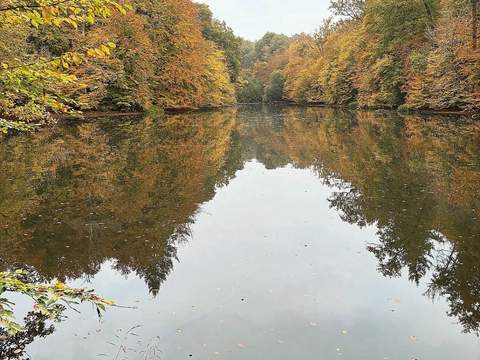
I ended up doing a 10km run around the Damvallei, a lowland peat reserve near Destelbergen that formed in an old meander of the Scheldt. It's a pleasant enough loop through boggy meadows, turfponds, and marshy woodland, with a bird hide overlooking the Damvalleimeer. The reserve is a Natura 2000 site and is known for its dragonfly diversity and breeding common terns. As a nature reserve, it's perfectly fine. As part of a national park, it's a stretch.
The full set
With Scheldevallei ticked off, I completed all six Belgian national parks in a single week. The honest summary: Belgium has two showstoppers worth seeking out (Vallée de la Semois and Entre-Sambre-et-Meuse), two that are pleasant enough if you're nearby (Bosland and Brabantse Wouden), and two that struggle to justify the national park label as they are so urbanised (Hoge Kempen outside heather season and Scheldevallei). Belgium is a small, densely populated country, and these designations are as much about regional development and tourism branding as they are about protecting wilderness. That's fine, but it helps to know that going in.