Parc National de l'Entre-Sambre-et-Meuse
 Belgium · Europe · Visited 22 October 2025 · Established 2022
This one surprised me. After Brabantse Wouden left me underwhelmed, I wasn't expecting much from Belgium's other new national parks. But Entre-Sambre-et-Meuse is a different proposition entirely. It's not going to rival the wilderness of a Scandinavian or North American park, and it still doesn't quite feel like a "proper" national park in the traditional sense, but the surrounding area is genuinely some of the prettiest countryside I've seen in Belgium.
Geological variety gives it a texture that most small European parks lack. You move between landscapes quickly, and each one feels noticeably different.
What makes it stand out, though, is the conservation story. This is a park built around rewilding. In November 2025, it was selected as one of just ten "Wilder Parks" across Europe by Rewilding Europe, an initiative focused on restoring natural processes in protected areas. The ambition is clear and worth noting directly from the park's own goals: by 2041, everyone will be able to escape into forests with a high degree of naturalness. For a park barely three years old, that's a bold target, and the kind of forward-thinking approach that gives a place like this real purpose beyond just being a nice walk.
The highlights
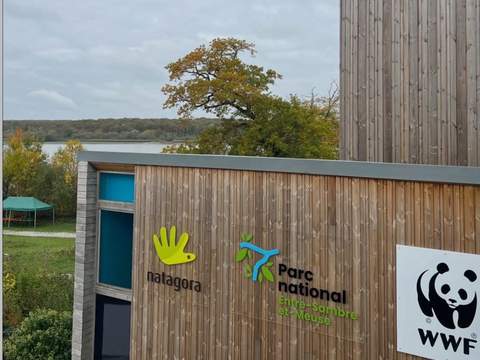
Aquascope Virelles was the standout. The 130-hectare nature reserve sits around the Étang de Virelles, one of the largest wetlands in Wallonia, and it's set up brilliantly for wildlife watching (there is a fee to enter). Multiple lookout points and covered bird hides are dotted around the pond and its reedbeds, and even on a casual visit I counted at least twenty bird species from the various vantage points. The site is home to over 245 recorded species in total, so there's always something moving. The small museum and exhibition inside the main building are a nice touch too, and the café deserves a mention — it served a good latte with views to complement.
Fondry des Chiens is the park's iconic site: a natural limestone sinkhole near the village of Nismes, formed by thousands of years of rain eroding the chalky bedrock. It's a dramatic, almost canyon-like formation that feels out of place in Belgium, in the best way. The surrounding area offers several well-marked hiking loops of varying length, from short family-friendly routes to longer treks through the Viroin valley.
The Calestienne region more broadly is worth exploring. The limestone hills support calcareous grasslands with orchids and wildflowers, and the pastoral landscape has a quiet, unhurried feel.
The character
Beyond the nature, the region's architecture adds something. The stone-built houses throughout the villages give the area a distinctly rural, almost southern European feel. It's unmistakably Belgian, but there's a warmth and character to the built environment that you don't get in the flatter, more modern parts of the country. It makes driving or cycling between sites genuinely enjoyable rather than just a means of getting from A to B.
Who it's for
Entre-Sambre-et-Meuse is a park I'd actually recommend seeking out. Between the rewilding mission, the variety of landscapes, and highlights like Aquascope Virelles and Fondry des Chiens, there's enough here for a solid day or two. If you're interested in conservation, or just want to see a quieter, more characterful side of Belgium, it's well worth the trip south.