Black River Gorges National Park
 Mauritius · Africa · Visited 23 September 2025 · Established 1994
This was a cool park. Black River Gorges is the largest national park in Mauritius, covering the south-western corner of the island, and it protects what remains of the country's native rainforest. What makes it stand out is the wildlife. Mauritius is famous for losing the dodo, but the species that survived are just as remarkable, and many of them exist nowhere else on earth. The park is home to 163 of Mauritius's 311 endemic plant species and is the primary habitat for almost all of the island's surviving endemic birds.
The star species include the Mauritian pink pigeon, which was down to just 10 individuals in the early 1990s, the Mauritius kestrel, which was once the world's rarest bird of prey with only four left in the 1970s, and the echo parakeet, the sole surviving native parrot in the Mascarene Islands. All three have been pulled back from the edge of extinction through intensive conservation work, and the park is one of the best places in the world to see them. There's a far greater sense of achievement in spotting one of these genuinely rare species than in seeing the macaque monkeys, which are everywhere and so accustomed to humans that sightings are virtually guaranteed. The monkeys are entertaining, but they're introduced and are actually a threat to the endemic birds, raiding nests for eggs and chicks.
The park also contains the tambalacoque tree, often called the "dodo tree," which is one of the last living connections to the island's most famous former resident.
The waterfalls
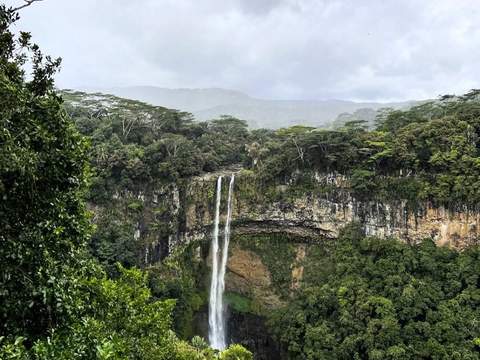
The waterfalls are a highlight. Alexandra Falls and Chamarel Falls are both impressive and accessible, and the views from the gorge viewpoints over the densely forested valleys to the coast are stunning. But the real reward is pushing deeper into the jungle itself. The park has over 60 kilometres of hiking trails ranging from easy walks to full-day treks, and the further you go from the main viewpoints, the more immersive the experience becomes. If you have time, explore beyond the obvious spots.
Nearby attractions (outside the park)
Two of Mauritius's most popular attractions sit just outside the park boundaries and pair well with a visit.
Le Morne Brabant is a striking 556-metre basalt monolith on the south-western tip of the island, designated a UNESCO World Heritage Site in 2008. In the 18th and 19th centuries, it was used as a refuge by escaped slaves (known as maroons) who hid in its caves and on its summit. When slavery was abolished in 1835, lookouts on the mountain saw British soldiers approaching and, mistakenly believing they were coming to recapture them, some of the slaves threw themselves from the cliffs rather than face re-enslavement. It's a powerful and sobering place. I hiked to the summit, and the views are exceptional with a hint of sadness as you read about the fallen slaves.
Next, the Chamarel Seven Coloured Earth is a natural geological formation of multicoloured sand dunes in vivid reds, browns, and blues, created by the weathering of volcanic basalt. It's a short detour from the park and worth a quick visit.
Why it's worth the visit
Mauritius as a whole is an incredible country, and Black River Gorges is where you get closest to what the island would have looked like before human settlement. The combination of unique endemic wildlife, dense tropical forest, waterfalls, and the conservation success stories behind species like the kestrel and pink pigeon makes it a genuinely special national park. The dodo may be gone, but the species that remain are fighting their way back, and this is where it's happening.